
Science
Empirical Inquiry across Physics, Chemistry & Biology
Building an empirical, inquiry-driven understanding of physical laws, chemical reactions, and biological life processes through concept visualization, diagrams, and scientific modeling.
Faculty in Charge (Dual Faculty)

Somya Ranjan Naik
Lead Faculty – Mathematics & Science
Somya helps students understand Mathematics and Science through intuitive explanations, step-by-step problem solving and guided practice. His approach focuses on building strong conceptual foundations, eliminating calculation hesitation and helping students master topics from first principles rather than memorizing formulas.

Shreya Tiwari
Lead Faculty – Science & English
Shreya helps students master Science and English through clear conceptual breakdowns, interactive inquiry and structured writing practice. Her approach bridges empirical scientific understanding with nuanced communication skills, helping students express their ideas with confidence and precision.
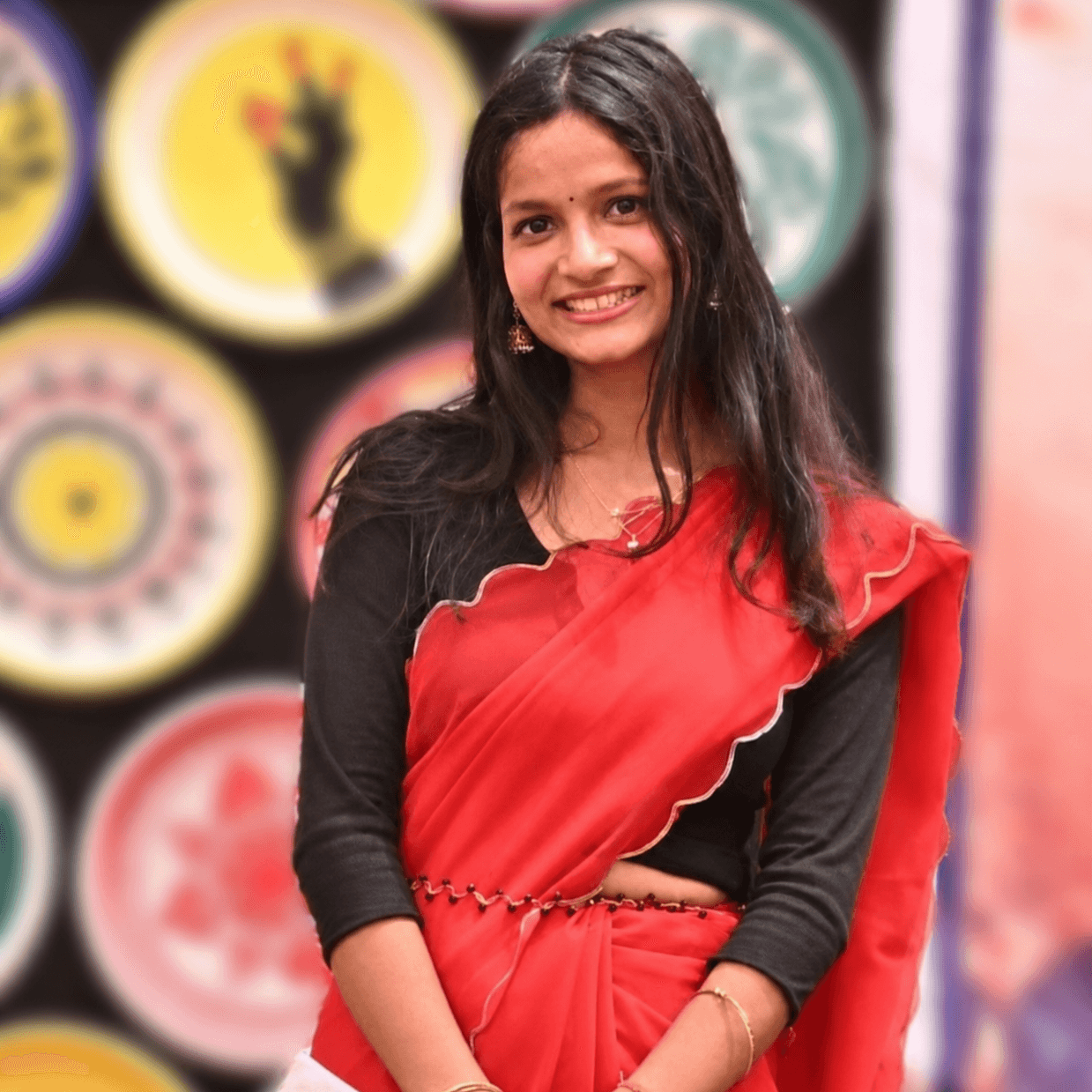
Suryabala Suman
Faculty – English, Science & Social Science
Suryabala helps students understand English, Science, and Social Science by transforming lessons into interactive, engaging conversations. Her teaching focuses on breaking down complex topics into simple, relatable ideas, connecting classroom concepts to real-life situations, and encouraging students to ask questions freely. With a patient, supportive approach, Suryabala adapts her explanations and practice to each student's unique learning pace, helping them overcome hesitation, build genuine curiosity, and grow into confident, independent, and expressive learners rather than relying on rote memorization.
Why Science Matters
Science develops critical observation, empirical reasoning, and an understanding of the natural and physical world. It enables students to analyze cause-and-effect relationships, interpret experimental data, and understand technological and environmental systems.
Subject Learning Approach
Science is taught collaboratively by Somya Ranjan Naik (focusing on physics numerical modeling and physical/chemical fundamentals) and Shreya Tiwari (focusing on empirical scientific inquiry, biological systems, and diagrammatic clarity).
Dual Faculty Specialization
Somya Ranjan Naik and Shreya Tiwari coordinate instruction to provide deep domain expertise across Physics, Chemistry, and Biology.
Visual Process Modeling
Visualizing microscopic reactions, electric circuits, and biological organ systems through clear diagrams.
Equation Balancing & Numericals
Step-by-step frameworks for physics numericals (ray optics, electricity) and chemical stoichiometry.
Key Learning Areas & Syllabus Modules
Physics: Mechanics, Energy & Electricity
Mathematical models of motion, gravitational forces, work-energy theorems, and electric current circuits.
Core Topics Covered:
- Laws of Motion & Gravitation
- Work, Power & Energy Conservation
- Electricity: Ohm's Law & Circuit Analysis
- Magnetic Effects & Electromagnetic Induction
Physics: Optics & The Physical World
Ray diagrams, spherical lenses and mirrors, and phenomena of dispersion and atmospheric refraction.
Core Topics Covered:
- Reflection & Refraction (Ray Diagrams)
- Lens & Mirror Equations (Sign Convention)
- Human Eye & Corrective Lenses
- Atmospheric Refraction & Scattering
Chemistry: Reactions, Acids, Bases & Metals
Balancing chemical equations, predicting precipitation reactions, and understanding periodic properties.
Core Topics Covered:
- Types of Chemical Reactions
- Acids, Bases & pH Indicators
- Metals, Non-metals & Reactivity Series
- Carbon Compounds & Functional Groups
Biology: Life Processes, Genetics & Ecology
Cellular respiration, circulatory systems, endocrine regulation, Mendelian genetics, and ecosystems.
Core Topics Covered:
- Nutrition, Respiration & Transportation
- Control & Coordination (Nervous/Hormonal)
- Reproduction & Heredity Laws
- Our Environment & Ecosystem Dynamics
Suggested Learning Outcomes
Upon completing targeted modules in Science, students develop:
Frequently Asked Questions about Science
Science Enrollment Summary
Assigned Instructors
Target Grade Band
Grades 6 to 10 & Secondary Foundation
Learning Formats
Diagnostic baseline review included
Enrol or Enquire for Science
Schedule an assessment to review student proficiency and design a targeted learning schedule with our faculty (Somya Ranjan Naik & Shreya Tiwari & Suryabala Suman).